One of the things I hear most often in the exam room is, "I guess he's just getting older."
Sometimes that's exactly what's happening. But sometimes I smile and say, "Let's not let age take the blame for everything just yet."
If your dog hesitates before jumping into the car, lags behind on walks, or your cat has quietly stopped leaping onto a favorite windowsill — those changes may be telling us something. Arthritis is one of the most common conditions I diagnose, and in most cases, it's something we can manage really well.
What's Actually Happening in the Joint
Think of cartilage as your pet's natural shock absorber. It cushions the joints so bones can move smoothly without grinding against each other. Over time, that cushioning wears down. When it does, the joints get inflamed, movement gets uncomfortable, and things like climbing stairs or jumping onto the couch start to hurt.
It usually develops gradually, which is a big part of why it's so easy to miss early on.
The Signs Can Sneak Up on You
Dogs will let you know immediately when dinner is five minutes late. Pain is a different story. A lot of dogs keep wagging their tails and trying to keep up with the family even when their joints are bothering them. What to watch for:
- Stiffness after resting
- Limping or favoring one leg
- Hesitating before stairs or jumping
- Falling behind on walks
- Less interest in playing
Cats are harder to read. They're remarkably good at acting like everything is fine. If your cat has quietly stopped jumping to her favorite spot on the bookshelf, don't chalk it up to her becoming less adventurous. She may just be telling you that it hurts now.
Other signs in cats:
- Sleeping more than usual
- Grooming less
- Choosing lower spots to rest
- Avoiding litter boxes with high sides
- Becoming quieter or more withdrawn
Because it all happens slowly, most families don't notice how much has changed until they really think back on it.
How We Figure Out What's Going On
It starts with a physical exam — I'll work through your pet's joints, watch how they move, and ask what you've been seeing at home. The small things you've noticed ("he takes forever to get up now," "she stopped meeting me at the door") often tell me as much as anything else.
X-rays help us see the joints directly and point us toward the right treatment plan.
What We Can Do
This is usually where pet owners are surprised, because there's genuinely a lot we can do now:
- Weight management to take stress off painful joints
- Prescription medications for pain and inflammation
- Joint supplements
- Monthly injections — available for both dogs and cats
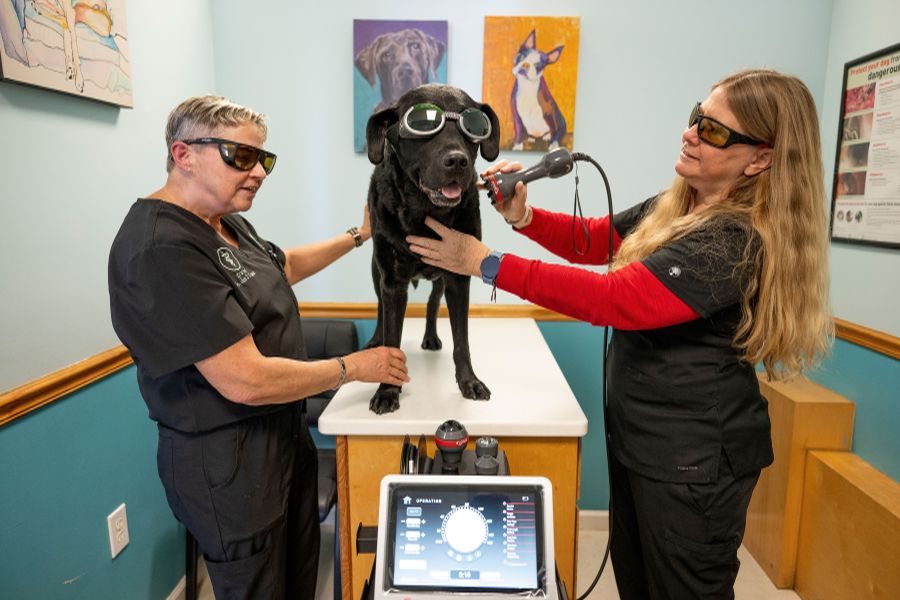
- Therapeutic laser to reduce inflammation
- Simple home changes: orthopedic bedding, ramps, non-slip rugs
Every pet is different, so we build the plan around what your pet actually needs and what fits your household.
Don't Wait Until They're Limping
Pets are remarkably good at adapting. They stop jumping quite as high. They rest a little longer. They adjust quietly, and we adjust right along with them without realizing it.
One of my favorite moments in this job is when a pet comes back after starting treatment and the owner says, "He's acting like himself again." Back to greeting people at the door, asking to play, hopping onto the couch like nothing ever happened.
If you've noticed your dog slowing down or your cat getting quieter, bring it up — don't wait for the annual visit. The sooner we catch it, the sooner we can do something about it. A lot of dogs and cats with arthritis go on to live comfortable, active lives for years. That's always the goal.